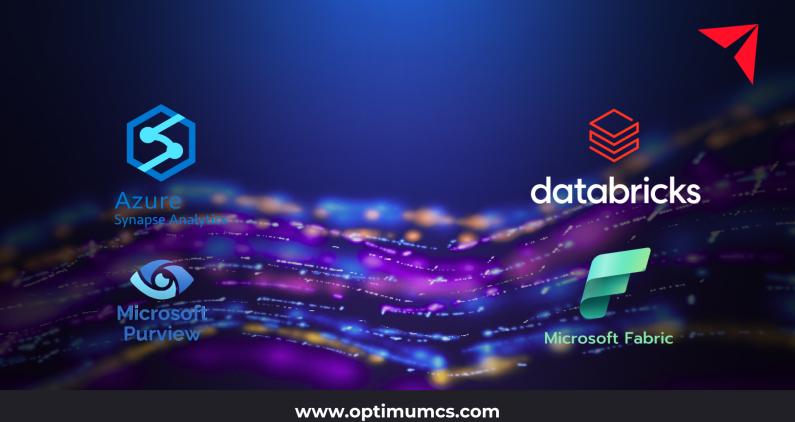
Many organizations adopted Azure Synapse and Microsoft Purview as part of an early move to cloud analytics and governance. At the time, these platforms addressed real needs around data warehousing, reporting, and metadata management.
Today, those same organizations are facing a new set of demands. Data volumes are larger, analytics expectations are higher, and AI use cases are becoming part of everyday conversations. As a result, teams are reevaluating whether their current architecture can scale with them.
For many, this reassessment is leading to Databricks and Microsoft Fabric as part of a more unified, future‑ready data platform.
The Reality of Purview and Synapse in Today’s Data Landscape
Purview and Synapse are not broken platforms. They continue to work well for certain reporting and governance scenarios. However, as organizations mature, several challenges tend to surface.
Performance and cost become harder to predict
Synapse can struggle when workloads expand beyond traditional data warehousing. Mixed analytics, larger data volumes, and increased concurrency often introduce performance bottlenecks and cost variability that are difficult to forecast.
Governance feels disconnected from daily workflows
Purview provides important cataloging and lineage capabilities, but governance often sits outside of the analytics experience. Data teams and analysts may see metadata, but it does not always translate into actionable controls within day‑to‑day pipelines.
The analytics stack becomes fragmented
Ingestion, transformation, reporting, governance, and AI frequently live across separate tools. Teams spend time managing integrations instead of delivering insights.
Expanding into AI adds complexity
Moving from BI into machine learning or generative AI typically requires additional services, custom pipelines, and more operational overhead. What starts as a reporting platform becomes increasingly difficult to extend.
These challenges are common signals that an organization has outgrown its original architecture.
What Organizations Actually Need From a Modern Data Platform
As data strategies evolve, priorities shift from individual tools to overall outcomes. Most organizations are looking for a platform that can:
- Support analytics, governance, and AI in one environment
- Deliver predictable performance and cost at scale
- Embed governance directly into data workflows
- Work with existing cloud and Microsoft investments
- Scale from BI to advanced analytics without introducing new silos
This is less about replacing technology and more about simplifying the ecosystem while preparing for what comes next.
Why Databricks Has Become the Core Analytics Platform
Databricks addresses many of these needs by design.
A unified Lakehouse architecture
Databricks combines data warehousing, data engineering, and machine learning on a single platform. This reduces tool sprawl and creates a consistent foundation for analytics and AI.
Governance built into the platform
With Unity Catalog, access controls, lineage, and auditing are part of the same environment where data is processed and analyzed. Governance is no longer an afterthought.
Performance and scalability
Databricks handles BI workloads, streaming data, machine learning, and AI on the same infrastructure. Teams can scale without maintaining separate systems for each use case.
Open and cloud‑agnostic
Databricks works across Azure, AWS, and Google Cloud. Organizations are not locked into a single ecosystem.
AI‑ready by default
Advanced analytics, feature engineering, and generative AI workloads are native to the platform rather than bolted on later.
For organizations pushing beyond traditional reporting, Databricks often becomes the backbone of the modern data stack.
Where Microsoft Fabric Fits Into the Architecture
This shift is not an either‑or decision between Databricks and Microsoft Fabric.
Microsoft Fabric simplifies analytics for teams that are deeply invested in the Microsoft ecosystem. Power BI, Fabric, and the broader Power Platform provide strong accessibility for business users and departmental analytics.
In many architectures, Fabric and Databricks work together. Fabric supports reporting and business consumption, while Databricks handles large‑scale transformation, advanced analytics, and AI workloads.
The result is a more flexible and cohesive platform that meets both business and technical needs.
A Practical Migration Path From Purview and Synapse
Modernization does not require a full rip‑and‑replace.
A successful migration typically starts with an assessment of what is working today and where friction exists. From there, organizations move incrementally:
- Identify Synapse workloads that are hitting performance or cost limits
- Migrate targeted pipelines to Databricks first
- Preserve existing Power BI reports and dashboards
- Re‑establish governance using Databricks and Microsoft‑aligned tools
- Expand gradually as confidence and value grow
This approach reduces risk and keeps business users productive throughout the transition.
The Outcomes Organizations Are Targeting
Organizations that modernize toward Databricks and Fabric are typically aiming for outcomes such as:
- More predictable analytics performance and cost
- Faster data pipelines and reporting
- Reduced platform sprawl and operational overhead
- Governance that teams actually use
- A clear path from analytics into AI and advanced use cases
The focus is not on adopting new tools for their own sake, but on creating a data foundation that can evolve with the organization.
Modernization Is About Alignment, Not Replacement
Purview and Synapse served an important role in an earlier phase of cloud analytics. Databricks and Microsoft Fabric support where organizations are going next.
The goal is not to abandon Microsoft investments or chase new platforms. The goal is to simplify, scale, and create a foundation that supports analytics, governance, and AI together.
With the right approach, organizations can modernize their data architecture without starting over and without slowing the business down.
About Optimum: Your Microsoft Fabric Partner
Optimum is a nationally recognized IT consulting firm and a trusted Microsoft and Databricks Partner, dedicated to crafting tailored solutions that harness the best of Microsoft Azure, Power Platform, Fabric, and Copilot with the scalability and advanced analytics capabilities of Databricks.
We focus on driving efficiency, reducing operational costs, and supporting digital transformation through an assessment-led, partnership-driven approach. Our goal is to help organizations maximize the impact and ROI of their Microsoft and Databricks investments while improving data confidence, user adoption, and decision-making.
Reach out today for a complimentary discovery session to explore how Optimum can help you build a modern, integrated data and analytics platform with Microsoft and Databricks.
Contact us: info@optimumcs.com | 713.505.0300 | www.optimumcs.com
Frequently Asked Questions
Do organizations need to fully replace Synapse to move to Databricks?
No. Most organizations take an incremental approach. Databricks is often introduced alongside existing Synapse workloads, with targeted pipelines or analytics use cases migrating first. This allows teams to modernize without disrupting reporting or business users.
What happens to Microsoft Purview when moving to Databricks?
Governance does not go away. Many organizations continue to use Microsoft-aligned governance while also leveraging Databricks’ native governance capabilities. In practice, governance becomes more embedded in analytics workflows rather than existing as a separate layer.
How does Databricks compare to Synapse for analytics performance?
Databricks is designed to handle a broader mix of workloads, including BI, streaming, machine learning, and AI, on a single platform. As data volumes and concurrency increase, organizations often find Databricks delivers more consistent performance and scalability.
Is Microsoft Fabric a replacement for Databricks?
Fabric and Databricks serve different but complementary roles. Fabric works well for simplifying analytics and reporting in Microsoft-first environments, while Databricks is commonly used for large-scale data engineering, advanced analytics, and AI. Many organizations use both together.
Can Databricks integrate with Power BI and other Microsoft tools?
Yes. Databricks integrates cleanly with Power BI, Azure services, and the broader Microsoft ecosystem. This allows organizations to preserve existing reporting investments while modernizing the underlying data platform.
What types of workloads are best suited for Databricks?
Databricks is well suited for data transformation, analytics at scale, streaming use cases, machine learning, and AI workloads. Organizations often adopt it when they need to move beyond traditional data warehousing into more advanced analytics.
Is migrating from Synapse and Purview risky?
Migration risk is largely a function of approach. Organizations that start with assessments, migrate incrementally, and preserve existing reporting and governance typically modernize without disruption. The goal is alignment, not replacement.
How do organizations get started with modernization?
Most successful efforts begin with understanding what is working today and where friction exists. From there, teams design a future-state architecture that aligns Databricks, Microsoft Fabric, and existing tools to business priorities rather than forcing a one-size-fits-all solution.