State and local governments and higher education institutions face growing pressure to hire faster, more fairly, and with greater transparency. At the same time, many public sector HR teams rely on mandated HR systems and manual review processes that were not designed to handle today’s application volumes or compliance expectations.
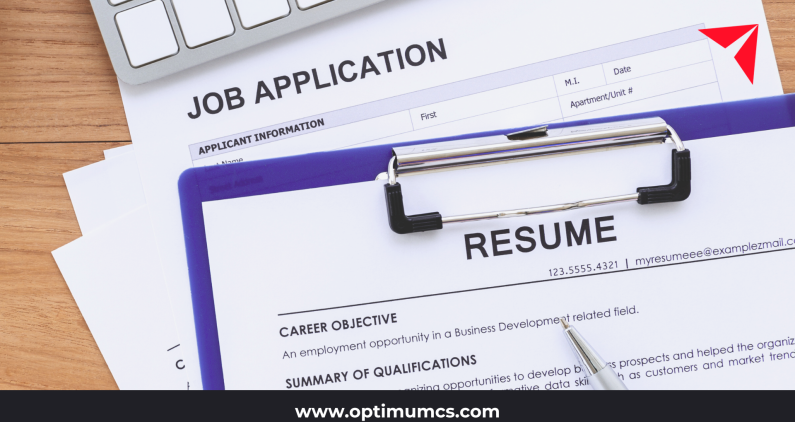
Most applicant information still arrives as unstructured PDFs. Employment history, skills, education, and certifications are buried in free‑form text that must be reviewed by hand. The result is a process that is time‑consuming, difficult to standardize, and challenging to audit.
Increasingly, SLED organizations are adopting AI‑supported job application analysis and skill matching to transform these unstructured application PDFs into structured, decision‑ready data. When implemented thoughtfully, this approach helps teams move from piles of documents to clear, ranked shortlists while keeping humans fully in control of hiring decisions.
Why Unstructured Job Applications Slow Down Public Sector Hiring
Public sector HR teams often manage hundreds of applications for a single role. Even when applications are exported from an applicant tracking system, they typically arrive as PDFs that require manual review.
This creates several challenges:
- Significant time spent reading and comparing applications
- Inconsistent evaluations across reviewers and departments
- Difficulty enforcing minimum requirements at scale
- Limited visibility into how decisions were made
- Challenges producing defensible, auditable hiring records
For organizations that must demonstrate fairness, consistency, and transparency, these limitations can become major operational and compliance risks.
What Job Application Parsing Really Means
Job application parsing is the process of converting unstructured application PDFs into structured data fields that can be analyzed consistently across all applicants.
Instead of reviewing each document line by line, HR teams can work with structured information such as:
- Education level and degrees
- Certifications and licenses
- Employment history and tenure
- Skills and competencies
- Responses to application questions
This same approach applies to job descriptions and role requirements, creating a structured comparison between what a role requires and what an applicant brings.
The goal is not automation for its own sake. The goal is clarity, consistency, and better use of human expertise.
From Application Analysis to Skill Matching and Ranked Shortlists
Once application data is structured, public sector teams can apply a consistent job matching process that supports faster and more objective evaluations.
A typical workflow looks like this:
- Export application PDFs from existing HR systems
Applications are pulled directly from mandated HR or recruiting platforms. - Convert PDFs into structured data
AI‑supported tools extract key fields and normalize information across applicants. - Verify minimum requirements
Baseline qualifications such as required certifications, degrees, or years of experience can be validated quickly. - Highlight and match applicant skills
Skills are mapped against job‑specific criteria to make comparisons clearer and more objective. - Apply a configurable scoring rubric
HR teams define how skills, experience, and qualifications are weighted based on the role. - Generate ranked shortlists and interview‑ready insights
Applicants are presented in ranked order, along with supporting context for human review.
This process reduces manual effort while preserving transparency and consistency throughout the hiring lifecycle.
The Role of AI and Why Humans Stay in Control
AI plays an important but carefully bounded role in modern public sector hiring solutions.
In this approach, AI is used to:
- Extract and organize information from application PDFs
- Highlight relevant skills and experience
- Surface recommendations and patterns
- Assist with generating interview questions tied to job criteria
What AI does not do is make hiring decisions or select candidates.
Human reviewers remain responsible for evaluating candidates, conducting interviews, and making final selections. The technology exists to support better decisions, not to replace professional judgment.
This human‑in‑the‑loop model is critical for public sector organizations that must prioritize fairness, accountability, and trust in their hiring processes.
How Platforms Like SharePoint, Azure, Copilot, and Power Platform Support This Approach
Many SLED organizations build this type of solution using familiar Microsoft platforms that align with existing security and governance requirements.
At a high level:
- SharePoint provides a controlled location to store and manage application documents
- Azure Document Intelligence supports accurate extraction of data from PDFs
- Copilot helps summarize information, surface insights, and assist HR teams during review
- Power Platform enables workflows, scoring logic, and integration with downstream systems
Together, these tools help convert unstructured applications into structured data that can be reviewed, scored, and reported on consistently.
A Practical Public Sector Scenario
Imagine a higher education institution hiring for an administrative or technical role. The HR team receives several hundred application PDFs.
Using AI‑supported application analysis:
- Job requirements are defined as structured criteria
- Applications are parsed and standardized
- Minimum qualifications are verified automatically
- Skills are matched against role‑specific needs
- Applicants are scored using a transparent rubric
- A ranked shortlist is generated for human review
Instead of starting with a stack of PDFs, hiring managers begin with a prioritized, well‑documented view of qualified applicants and the reasoning behind each score.
Getting Started with Application Parsing and Skill Matching
For public sector organizations exploring this approach, a few practical steps can help ensure success:
- Start with a clearly defined hiring use case
Focus on one role or job family with consistent requirements. - Document minimum requirements and scoring criteria
Make expectations explicit before introducing technology. - Assess how applications are currently stored and exported
Understand existing HR system constraints. - Design with governance in mind
Ensure security, access controls, and auditability are built in from the start. - Pilot before scaling
Refine parsing accuracy, scoring logic, and reviewer experience before expanding.
Join Our April 14th “Top of Mind Tuesday” Webinar with Microsoft
If you would like to see this approach in action, join Microsoft and Optimum on April 14, 2026 for our Top of Mind Tuesday session:
AI‑Powered Job Application Analysis and Skill Matching: From PDFs to Ranked Shortlists
In this solution‑focused session, we will demonstrate how exported application PDFs can be transformed into structured, decision‑ready data using Copilot, Azure Document Intelligence, SharePoint, and Power Platform.
You will learn how to:
- Convert applicant PDFs into structured data for faster, cleaner analysis
- Define and enforce minimum requirements to verify baseline qualifications
- Highlight and match applicant skills to job‑specific criteria
- Apply a configurable scoring rubric that supports fair, defensible decisions
- Generate ranked shortlists and interview‑ready insights while keeping humans fully in control of hiring decisions
This session is for state and local government agencies and higher education institutions looking to modernize hiring without sacrificing transparency or accountability.
Join us on April 14th at 12pm CST to see how AI‑supported application analysis can improve public sector hiring. Click here to register for the webinar!
About Optimum
Optimum is an award-winning IT consulting firm providing AI powered data and software solutions with a tailored approach to modernizing systems, processes, and analytics for mid-market and large enterprises. Our team combines deep expertise across data management, business intelligence, AI and ML, and custom software solutions to help organizations enhance efficiency, improve visibility, strengthen decision making, and reduce operational and labor costs.
From application development and system integration to data analytics, artificial intelligence, and cloud consulting, we are your one-stop shop for your software consulting needs.
Contact us: info@optimumcs.com | 713.505.0300 | www.optimumcs.com