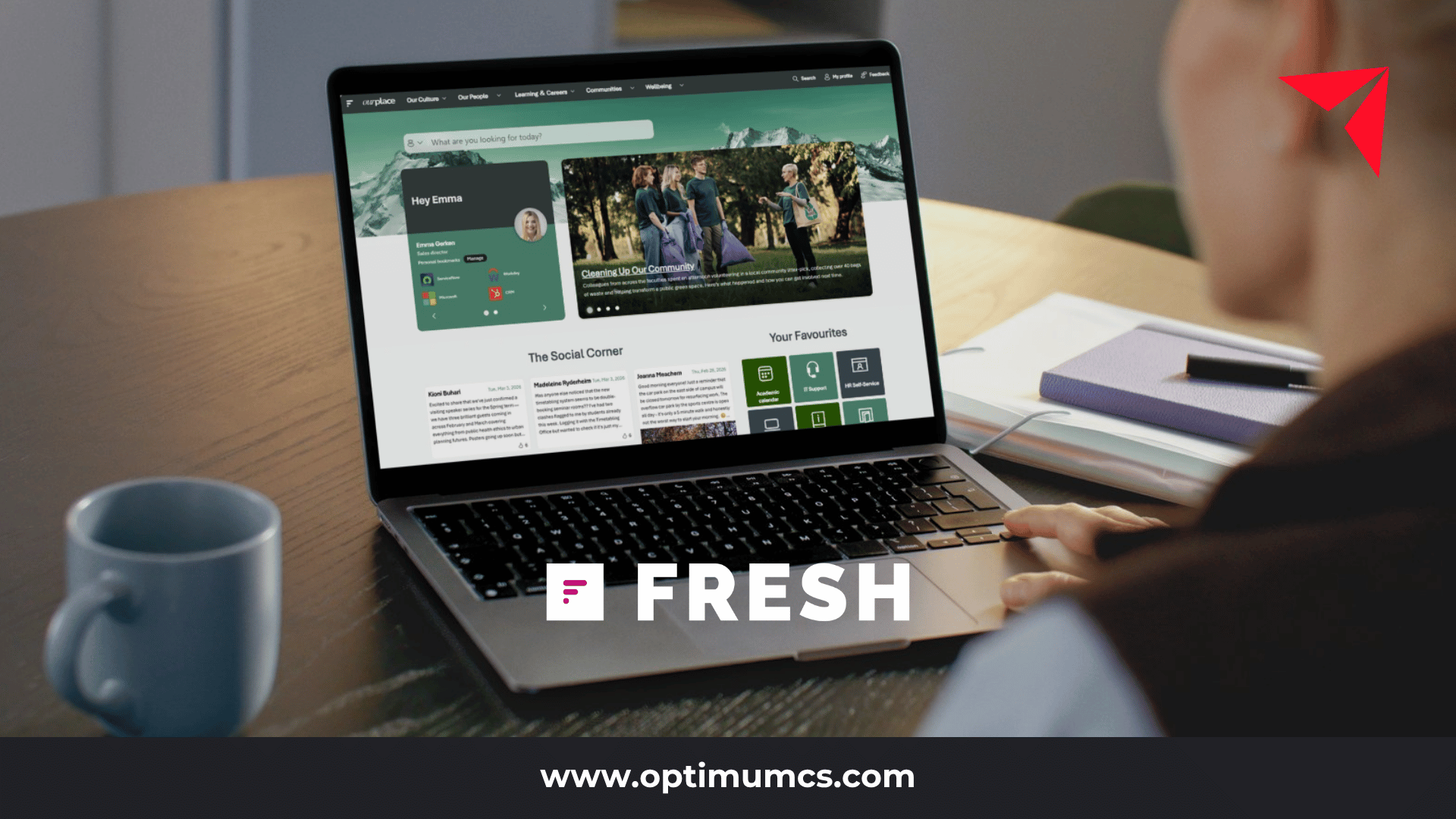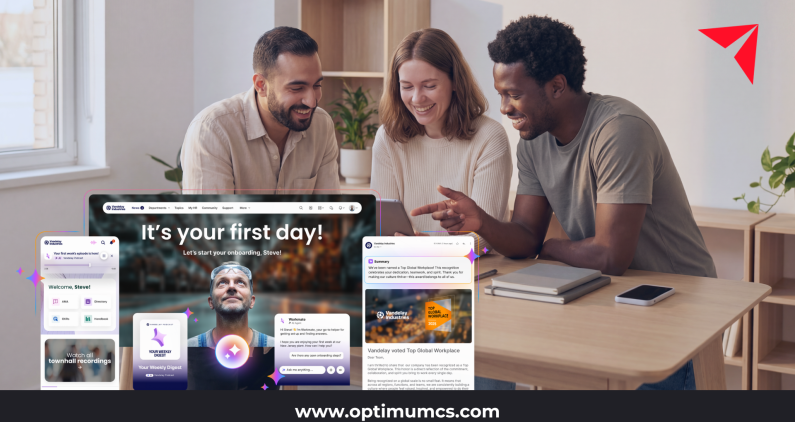
If you have spent any time in a company intranet lately, you already know the feeling. Outdated pages. Information that may or may not still be accurate. A search bar that returns everything except what you were looking for. And if your organization has a frontline, shift-based, or distributed workforce, there is a good chance a meaningful portion of your employees never see the intranet at all.
This is not a content problem. It is a platform problem. And it is exactly why a growing number of enterprise organizations are migrating to Staffbase.
The Legacy Intranet Problem Is Getting Worse, Not Better
Most enterprise intranets were designed around a simple assumption: build a place to store content, and employees will come find it. That assumption was shaky twenty years ago. Today, it does not hold up at all.
SharePoint-based intranets, in particular, were built as document repositories first and communication platforms second. They can house enormous amounts of content, but they were never designed to actively deliver the right information to the right employee at the right time. The result, for most organizations, is an intranet that technically exists but functionally goes unused.
Workplace from Meta presented a different model, built around a social, feed-based experience. But Meta announced it is sunsetting Workplace, leaving thousands of organizations searching for a new home for their employee communications, and forcing a reckoning many had been putting off.
First-generation SaaS intranet tools have their own ceiling. Most were built before AI was a serious consideration, which means retrofitting intelligent search, personalization, or AI-powered assistance into their architecture is, at best, an awkward patch job.
Meanwhile, the workforce these platforms are meant to serve has changed. More employees work outside a traditional office. More work happens on a phone, not a laptop. And expectations for how information should reach people, instantly, relevantly, without having to go looking for it, have shifted dramatically. Most intranets have not kept pace.
What Is Staffbase and What Makes It Different?
Staffbase is an AI-native employee experience platform built to solve the problem legacy intranets were never designed to solve: getting the right information to every employee, proactively, across whatever channel they actually use.
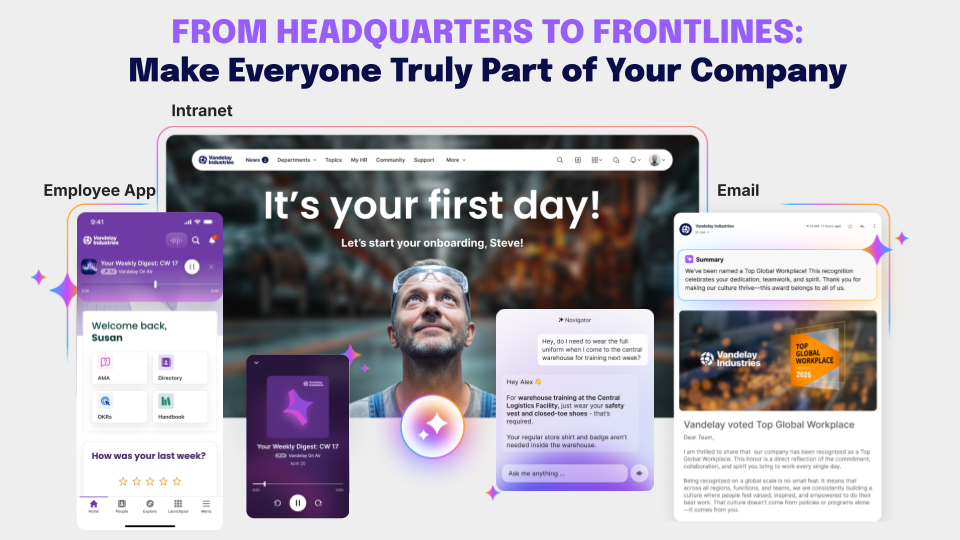
Rather than treating the intranet as a single destination, Staffbase orchestrates a multichannel experience that includes a personalized desktop intranet, a branded mobile employee app, targeted email, SMS, and digital signage, all governed from one platform with one content model. Communicators create content once and publish it everywhere it needs to go, instead of managing five disconnected tools and five disconnected audiences.
What sets Staffbase apart most, though, is its approach to AI. Staffbase was not retrofitted with AI features bolted onto an old architecture. It was built AI-native from the foundation up, with content governance, audience targeting, and intelligent delivery baked into the platform’s core design. That distinction matters enormously, because AI is only as good as the structure and governance behind it. A chatbot layered on top of a messy, ungoverned content library will confidently deliver wrong answers. Staffbase was built to prevent exactly that.
Who Is Staffbase Built For?
Here is a number worth sitting with: on most legacy intranet platforms, desktop-only adoption among frontline and deskless employees typically lands somewhere between 20% and 30%. For organizations in healthcare, logistics, manufacturing, retail, and other industries where most employees never sit down at a desk, that means the majority of the workforce is functionally cut off from company communications, HR resources, and important updates.
Staffbase was deliberately designed to close that gap. Its mobile employee app is not an afterthought bolted onto a desktop product. It is a first-class channel, built with offline access, push notifications, and the same AI-powered services available on desktop. Organizations using Staffbase to reach historically hard-to-reach populations report dramatically higher engagement than what desktop-only platforms typically achieve.
If your workforce includes drivers, nurses, technicians, retail associates, warehouse staff, or anyone else who does not spend their day in front of a company laptop, this is the single most important reason to take a serious look at Staffbase.

The AI Features That Set Staffbase Apart
Staffbase’s AI capabilities are where the platform truly distinguishes itself from the rest of the intranet market. A few worth understanding:
Navigator is Staffbase’s AI-powered employee assistant. Instead of searching through pages and hoping for the best, employees can ask a direct question, about a policy, a process, a benefit, and receive a governed, verified answer instantly, complete with source attribution and a last-verified date.
Content Pro addresses one of the oldest problems in intranet management: content rot. It uses AI to proactively identify outdated content, broken links, and structural issues, keeping the platform clean without requiring a small army of administrators to do it manually.
On Air delivers personalized, podcast-style audio briefings tailored to each employee’s role and interests, an especially useful format for employees who are on the move rather than sitting at a screen.
Employee AI extends further, becoming the governed foundation through which organizations roll out broader AI policy and tools to their entire workforce, not just the desk-based portion of it.
Each of these features depends on the same underlying principle: AI is only trustworthy when the content behind it is accurate, current, and properly governed. Staffbase was built around that principle from day one.
How Staffbase Works with Microsoft 365 and Copilot
For organizations already running Microsoft 365, Staffbase is not a competing platform to fight against. It is designed to extend that investment, not replace it.
Staffbase integrates natively with Azure Active Directory, Microsoft Teams, SharePoint, and Microsoft Copilot. That last integration deserves particular attention. As more organizations roll out Copilot across their workforce, a critical question emerges: what happens when an employee asks Copilot a question and the answer comes from an outdated SharePoint page nobody has touched in three years?
Staffbase’s content governance layer is what makes Copilot’s answers trustworthy in the first place. Because content in Staffbase is owned, reviewed, and verified on a defined cycle, Copilot can draw from that governed source instead of whatever scattered, unverified content happens to exist across a Microsoft tenant. IT ends up managing one clean content estate instead of two messy ones.
What Does Migrating to Staffbase Actually Involve?
Here is the part most vendors gloss over: migrating to Staffbase is not a simple lift-and-shift exercise. Staffbase organizes content through a channel-based model with granular audience targeting, an approach that is meaningfully different from how most legacy intranets structure pages, sites, and permissions.
That difference is exactly why Staffbase is more powerful, but it also means migration requires real planning. A thoughtful migration typically involves a full content assessment to understand what exists today, information architecture design to map old content into Staffbase’s channel and page model, permission and audience mapping since Staffbase targets content differently than most source platforms, and governance groundwork, defining content ownership and review cycles before launch, not after.
Organizations that skip this planning phase tend to migrate far more content than they actually need, often three to four times more, creating a cluttered, hard-to-maintain environment on day one. The organizations that get this right are the ones that treat migration as a strategic exercise, not a technical chore.
How Optimum Helps Organizations Move to Staffbase
This is exactly where Optimum comes in. As an official Staffbase partner, we help organizations plan and execute Staffbase migrations that are clean, governed, and built for adoption from the very first day, not retrofitted six months after a messy launch.
To make that process as low-risk as possible, Optimum offers a free Intranet Migration Assessment. In three to five business days, with no cost and no commitment, we deliver a complete inventory of your current intranet environment, a migration complexity rating for every site, permission and audience mapping, identified migration risks, and Staffbase information architecture recommendations, all wrapped into an executive-ready report your leadership team can act on.
If your organization is evaluating Staffbase, or trying to figure out what a migration would even involve, that assessment is the most useful place to start.
Ready to find out what migrating to Staffbase would really look like for your organization? Get your free Intranet Migration Assessment.
About Optimum
Optimum is a nationally recognized IT consulting firm and a trusted Microsoft Partner, dedicated to crafting tailored solutions that harness the power of Office 365 and Azure, by utilizing Power Platform, Copilot, SharePoint and Digital Workplace Portals, Teams, and Azure-based solutions.
We specialize in driving efficiency, reducing operational costs, and facilitating digital transformation for organizations. Our services are designed to maximize the impact and ROI of Microsoft solutions investments, with a focus on enhancing user adoption and engagement.
Reach out today for a free Intranet Migration Assessment, and let’s explore the best digital workplace solution for your needs!
Contact us: info@optimumcs.com | 713.505.0300 | www.optimumcs.com