For years, enterprise analytics strategies have followed a familiar pattern. Organizations invest in separate tools for data integration, data warehousing, business intelligence, and advanced analytics. Teams grow around those tools. Governance frameworks get layered on after the fact. Over time, the analytics ecosystem becomes fragmented, expensive to maintain, and difficult to scale.
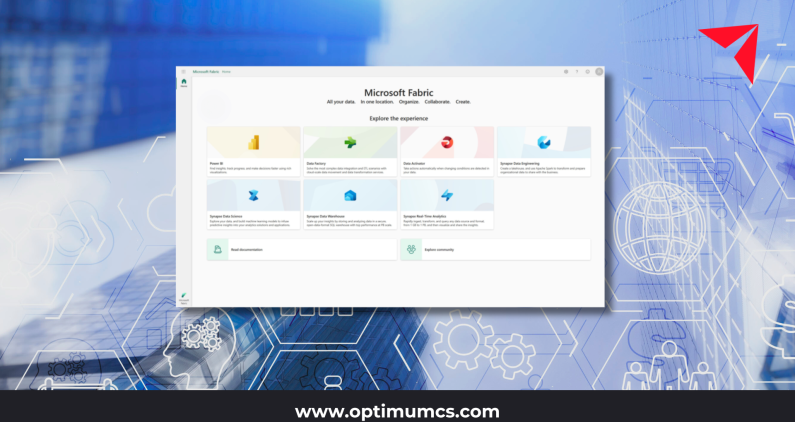
Microsoft Fabric signals a meaningful shift in how organizations can approach analytics strategy. Rather than treating data engineering, analytics, and BI as loosely connected capabilities, Fabric brings them together into a single, unified platform that supports the full data lifecycle. That architectural shift has strategic implications that go far beyond tool consolidation.
For IT and data leaders, Microsoft Fabric changes how analytics investments are evaluated, how teams collaborate, and how insights are delivered to the business. The platform challenges long standing assumptions about ownership, governance, and the tradeoff between speed and control.
This post explores what Microsoft Fabric changes about enterprise analytics strategy, with a focus on real world use cases and guidance on when it makes sense to bring in Fabric expertise to ensure long term success.
Key Microsoft Fabric Use Cases
Microsoft Fabric use cases span a wide range of industries and organizational maturity levels. What makes Fabric different is not any single capability, but how those capabilities work together within one platform. This enables organizations to solve problems that previously required multiple tools, custom integrations, and ongoing operational overhead.
Data Warehousing at Enterprise Scale
One of the most common Microsoft Fabric use cases is modernizing enterprise data warehousing. Fabric integrates Synapse powered data warehousing directly into the platform, allowing organizations to store, manage, and query large volumes of structured data at scale.
From a strategic standpoint, this simplifies how data warehouses fit into the broader analytics ecosystem. Instead of treating the warehouse as a standalone system that feeds downstream tools, Fabric positions it as a shared foundation that supports reporting, advanced analytics, and machine learning from the same data estate.
This approach reduces duplication, improves performance, and enables analytics teams to focus on delivering insight rather than managing infrastructure.
Simplified Data Integration Across Systems
Data integration remains one of the biggest challenges in enterprise analytics. Organizations rely on data from ERP systems, CRM platforms, cloud applications, on premises databases, and third party sources. Traditional integration approaches often result in brittle pipelines and inconsistent data definitions.
Microsoft Fabric addresses this by simplifying data ingestion and transformation through built in integration capabilities that draw from Azure Data Factory and Synapse. Fabric supports a wide range of data sources and formats, making it easier to standardize data and build repeatable, governed pipelines.
From an analytics strategy perspective, this enables faster onboarding of new data sources and supports more agile analytics initiatives without sacrificing data quality.
Machine Learning and Data Science Enablement
Fabric also plays a growing role in supporting machine learning and data science initiatives. By bringing data engineering, analytics, and data science tools into a single environment, Fabric reduces the friction that often slows down advanced analytics projects.
Data scientists can access curated, governed data without relying on custom extracts or one off pipelines. Models can be built, trained, and deployed closer to the data, improving performance and reducing operational complexity.
For organizations that want to expand predictive analytics without dramatically increasing headcount, Microsoft Fabric provides a more accessible path to operationalizing machine learning.
Real Time Analytics and Streaming Data
Another area where Microsoft Fabric is changing analytics strategy is real time analytics. Many organizations struggle to operationalize streaming data due to complexity and cost. Fabric integrates real time analytics capabilities that allow teams to ingest, process, and act on streaming data at scale.
This is particularly valuable in industries such as retail, finance, and manufacturing, where real time insights drive operational efficiency and customer experience. With Fabric, real time data does not sit outside the analytics ecosystem. It becomes part of the same governed environment as historical and operational data.
Predictive Analytics and Business Intelligence with Power BI
Business intelligence remains a cornerstone of enterprise analytics strategy, and Microsoft Fabric strengthens this layer through deep integration with Power BI. Data stored and processed within Fabric can be easily surfaced through dashboards, reports, and predictive models that business users already understand.
This tight integration makes it easier to scale BI across the organization while maintaining consistency and trust in the data. Executives and frontline teams can access insights without navigating multiple tools or data silos.
For many organizations, this is where the value of Microsoft Fabric becomes most visible. Faster access to reliable insights leads to better decisions and greater confidence in analytics investments.
Data Governance and Security by Design
Enterprise analytics strategies often struggle with governance. As access expands and self service grows, organizations worry about security, compliance, and data misuse. Microsoft Fabric addresses this through built in governance capabilities powered by Microsoft Purview.
Fabric enables organizations to define policies, manage data lineage, and enforce security controls across the entire analytics environment. This allows analytics programs to scale responsibly, even in regulated industries such as healthcare and finance.
Strategically, this reduces the need to choose between speed and control. Governance becomes an enabler rather than a blocker.
When to Bring in Fabric Expertise
While Microsoft Fabric simplifies many aspects of enterprise analytics, it also represents a shift in how data platforms are designed and operated. For many organizations, realizing the full value of Fabric requires more than turning on new features.
This is where Microsoft Fabric consultants and Microsoft Fabric consulting services can play a critical role.
Aligning Fabric with Enterprise Analytics Strategy
One of the most common challenges organizations face is treating Fabric as a technology upgrade rather than a strategic change. Fabric affects data architecture, team workflows, governance models, and analytics operating models.
Experienced Fabric consultants help organizations align the platform with business goals, rather than forcing existing processes into a new tool. This includes defining what success looks like, identifying high value Fabric use cases, and sequencing implementation in a way that delivers early wins without creating long term debt.
Designing for Scale and Adoption
Fabric makes it easier to unify analytics capabilities, but scale and adoption still require thoughtful design. Decisions around workspace structure, data modeling, security, and user access have lasting impact.
Microsoft Fabric consulting services help organizations design environments that support growth, self service, and collaboration while maintaining performance and governance. This is especially important for enterprises with multiple business units or complex data landscapes.
Integrating Fabric into Existing Ecosystems
Few organizations start from a clean slate. Legacy data warehouses, existing BI tools, and custom integrations are common. Bringing Fabric into this environment requires careful planning.
Fabric experts help organizations integrate existing systems without disrupting critical workflows. This includes hybrid architectures, phased migrations, and coexistence strategies that minimize risk while enabling modernization.
Avoiding Common Pitfalls
As with any powerful platform, it is easy to misuse Fabric. Common pitfalls include over centralization, underestimating governance requirements, or failing to prepare teams for new ways of working.
Consultants with real world Fabric experience help organizations avoid these issues by applying proven patterns and lessons learned. This accelerates time to value and reduces costly rework.
Building a Sustainable Analytics Foundation
Ultimately, Microsoft Fabric is not just about analytics today. It is about creating a foundation that supports future needs such as advanced AI, real time decisioning, and enterprise-wide data products.
Bringing in Fabric expertise ensures that early design decisions support long term strategy, rather than limiting what is possible down the road.
How Microsoft Fabric Reshapes Analytics Strategy
Microsoft Fabric changes enterprise analytics strategy by collapsing complexity and enabling closer alignment between data, analytics, and the business. It shifts the focus from managing tools to delivering outcomes.
Organizations that approach Fabric strategically gain more than a modern platform. They gain a more agile analytics organization, better governance, and faster access to insight.
As more enterprises adopt Fabric, the differentiator will not be who implements it first, but who implements it thoughtfully. The most successful organizations will be those that pair the platform with clear strategy, strong governance, and the right expertise.
For IT and data leaders, Microsoft Fabric is not just a new tool to evaluate. It is an opportunity to rethink how analytics supports the business, today and into the future.
About Optimum: Your Microsoft Fabric Partner
Optimum is a nationally recognized IT consulting firm and a trusted Microsoft Partner, dedicated to crafting tailored solutions that harness the power of Office 365 and Azure, by utilizing Power Platform, Copilot, SharePoint and Digital Workplace Portals, Teams, and Azure-based solutions.
We specialize in driving efficiency, reducing operational costs, and facilitating digital transformation for organizations. Our services are designed to maximize the impact and ROI of Microsoft solutions investments, with a focus on enhancing user adoption and engagement.
Reach out today for a complimentary discovery session, and let’s explore the best Microsoft solution for your needs!
Contact us: info@optimumcs.com | 713.505.0300 | www.optimumcs.com